A story from Paul in Chains · The Early Church
Shipwreck on the Way to Rome
Paul sails for Italy as a prisoner. A storm drives the ship for fourteen days, an angel promises that every life will be spared, and all 276 reach the shore of Malta as the ship breaks up.
Remember it byA warning ignored, fourteen nights of storm, 276 people on board, and not one life lost.
Where it fits
- The Gospel to the Nationsc. AD 46–57
- Shipwreckc. AD 60
- John’s Revelationc. AD 95
This story belongs to Paul in Chains on the timeline, in the era of The Early Church (AD 30–95).
Who is in it
-
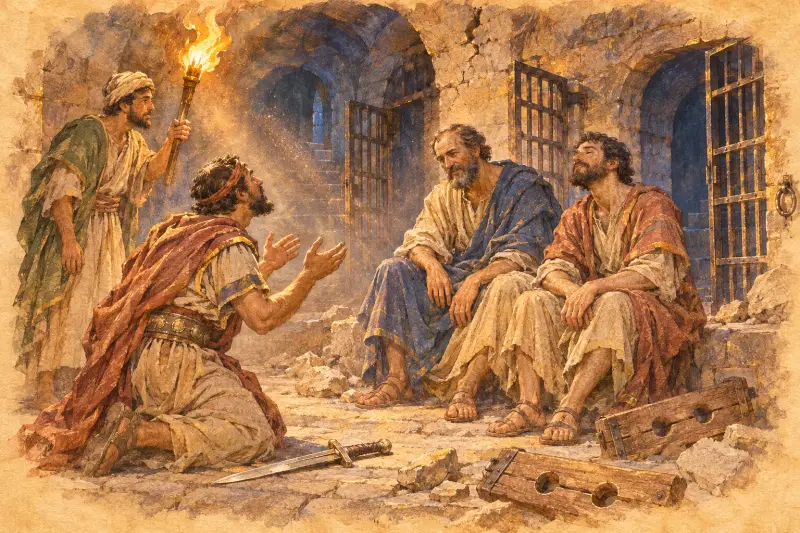
Paul
Apostle to the Gentiles
The persecutor who met the risen Jesus and carried the good news across the Roman world.
-
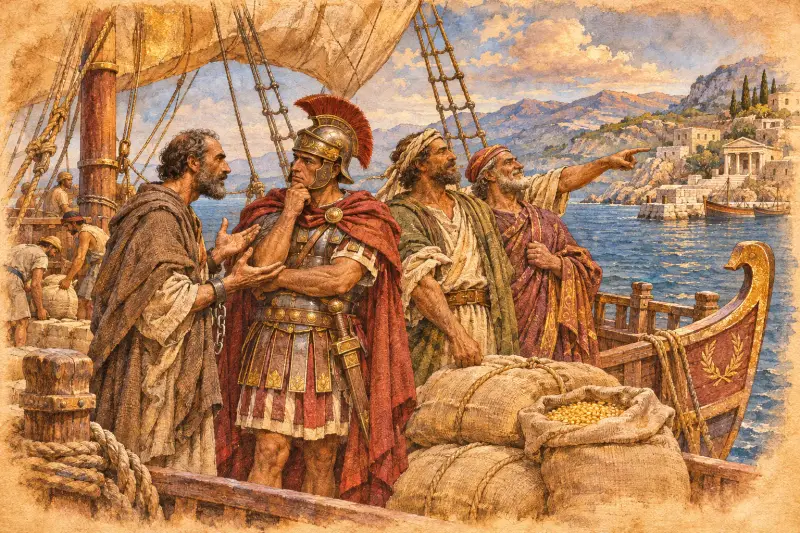
Julius
Roman centurion
The centurion who guarded Paul on the voyage to Italy and saved his life in the wreck.
The story
-
IThe warning ignored
Acts 27:1–13
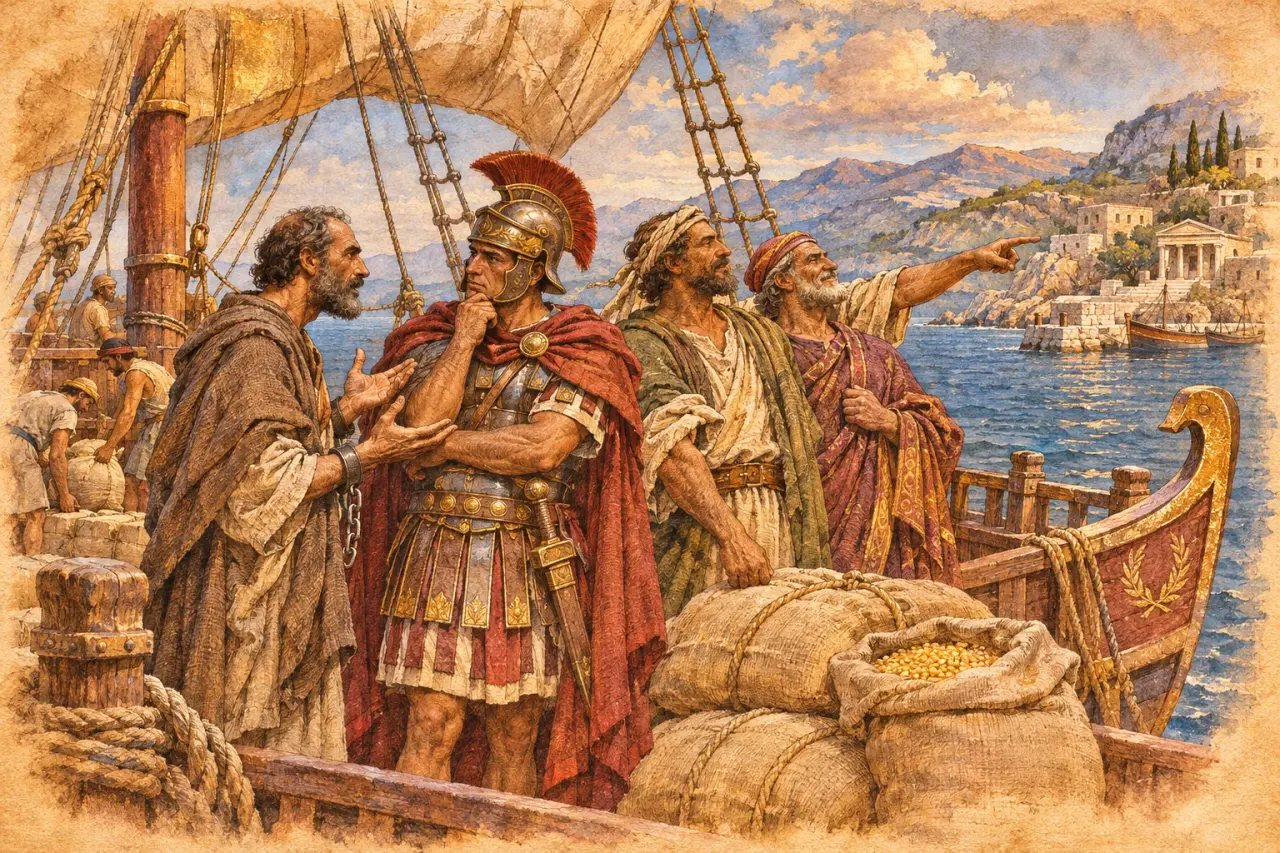
When it was decided to sail for Italy, Paul and some other prisoners were handed over to a centurion named Julius, of the Augustan band. At Sidon Julius treated Paul kindly and let him go to his friends. The winds were against them. At Myra the centurion put everyone on a ship of Alexandria sailing for Italy, and after many slow days they came with difficulty to a place on Crete called Fair Havens.
Much time had passed and the voyage was now dangerous, because the Fast had already gone by. Paul warned them that it would bring injury and much loss, not only of the cargo and the ship but of their lives. The centurion paid more attention to the master and the owner of the ship. The harbour was not suitable to winter in, and the majority wanted to reach Phoenix, another port of Crete. When a soft south wind blew, they weighed anchor and sailed close along the shore.
But the centurion gave more heed to the master and to the owner of the ship than to those things which were spoken by Paul.
Acts 27:11 · World English Bible -
IICaught in the storm
Acts 27:14–20
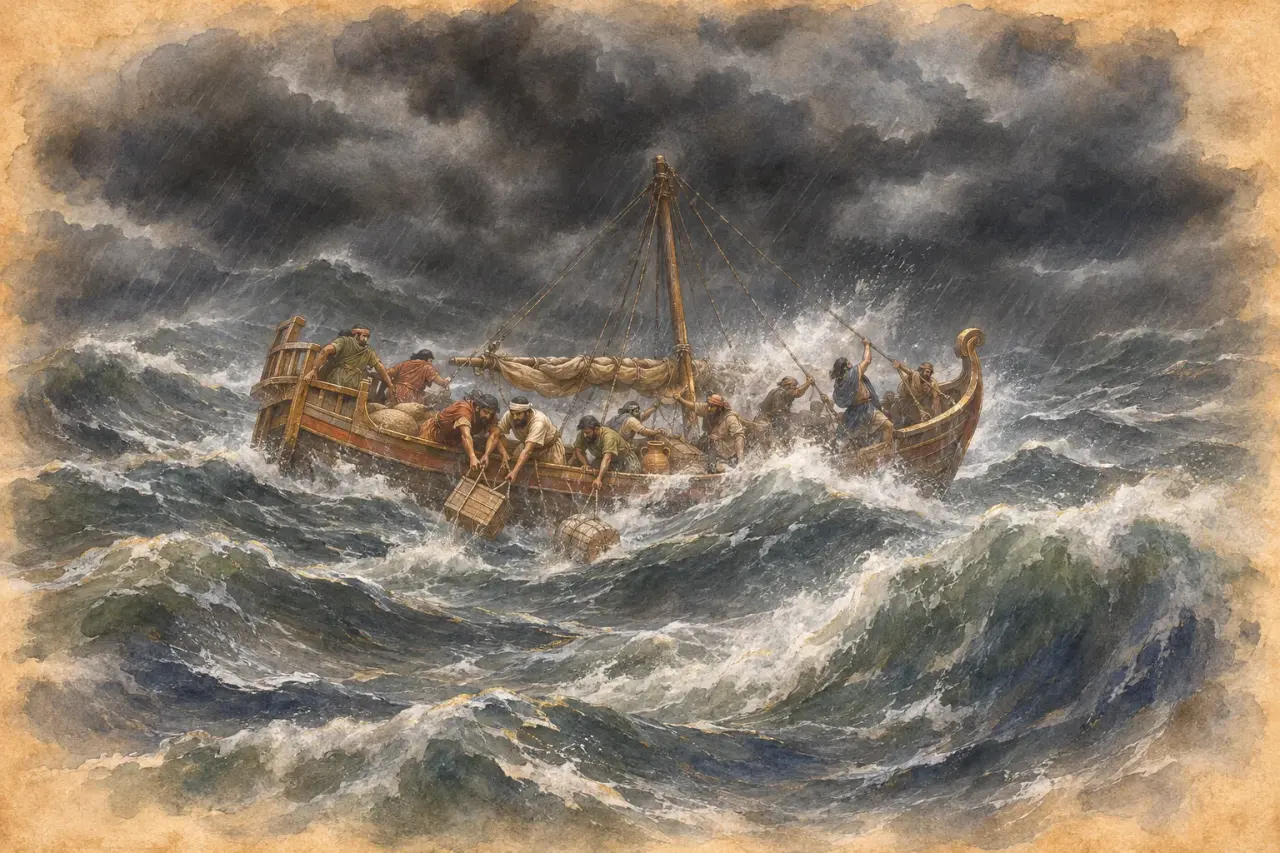
Before long a stormy wind called Euroclydon beat down from the shore. The ship was caught and could not face the wind, so they gave way to it and were driven along. Under the shelter of a small island called Clauda they managed, with difficulty, to secure the ship's boat and hoist it up. Then they used cables to strengthen the ship. They were afraid of running aground on the Syrtis sand bars, so they lowered the sea anchor and let the ship be driven.
The storm did not let up. The next day they began to throw things overboard. On the third day they threw out the ship's tackle with their own hands. For many days neither sun nor stars shone on them, and the storm kept pressing hard. In the end all hope that they would be saved was taken away.
When neither sun nor stars shone on us for many days, and no small storm pressed on us, all hope that we would be saved was now taken away.
Acts 27:20 · World English Bible -
IIIThe angel's promise
Acts 27:21–26
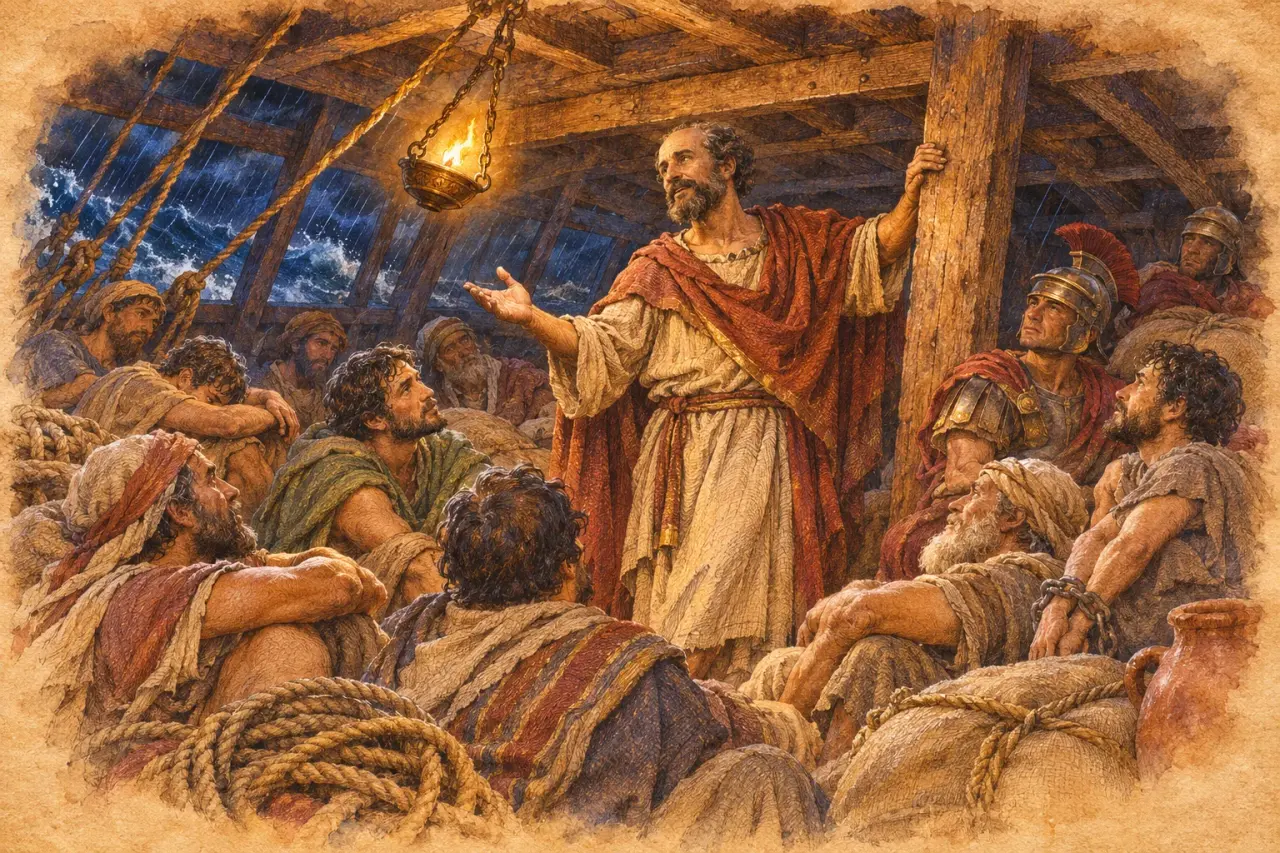
They had gone a long time without food. Then Paul stood up in the middle of them. He said they should have listened to him and not set sail from Crete, and they would have been spared this injury and loss. But now he urged them to cheer up. There would be no loss of life among them. Only the ship would be lost.
That very night, he said, an angel had stood beside him, an angel of the God he belonged to and served. The angel told him not to be afraid. Paul must stand before Caesar, and God had granted him all those who sailed with him. So Paul told them again to cheer up, because he believed God that it would be just as he had been told. But they would have to run aground on a certain island.
For there stood by me this night an angel, belonging to the God whose I am and whom I serve, saying, ‘Don’t be afraid, Paul. You must stand before Caesar. Behold, God has granted you all those who sail with you.’
Acts 27:23-24 · World English Bible -
IVThe fourteenth night
Acts 27:27–38
On the fourteenth night, about midnight, the sailors sensed that land was near. They took soundings and found twenty fathoms, then fifteen. Fearing rocky ground, they let go four anchors from the stern and wished for daylight. The sailors lowered the boat, pretending they would lay out anchors from the bow, but they were trying to flee. Paul told the centurion and the soldiers that unless these men stayed in the ship, they could not be saved. The soldiers cut the ropes and let the boat fall away.
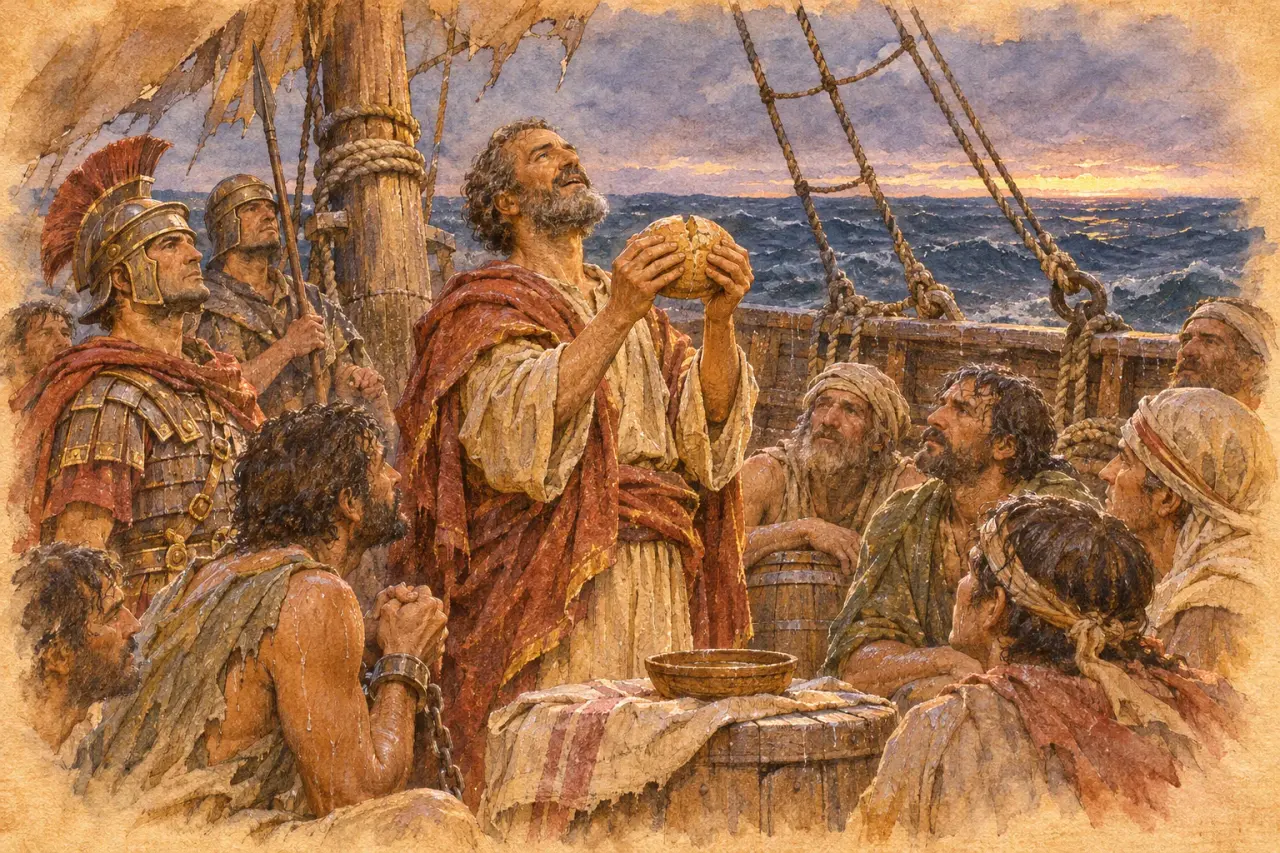
As day was coming, Paul begged them all to take some food. It was the fourteenth day they had gone without, and they needed it for their safety. Not a hair would perish from any of their heads. He took bread, gave thanks to God in front of them all, broke it and began to eat. They all cheered up and ate, two hundred and seventy-six people. Then they lightened the ship by throwing the wheat into the sea.
While the day was coming on, Paul begged them all to take some food, saying, “Today is the fourteenth day that you wait and continue fasting, having taken nothing. Therefore I beg you to take some food, for this is for your safety; for not a hair will perish from any of your heads.”
Acts 27:33-34 · World English Bible -
VThe ship breaks up
Acts 27:39–44
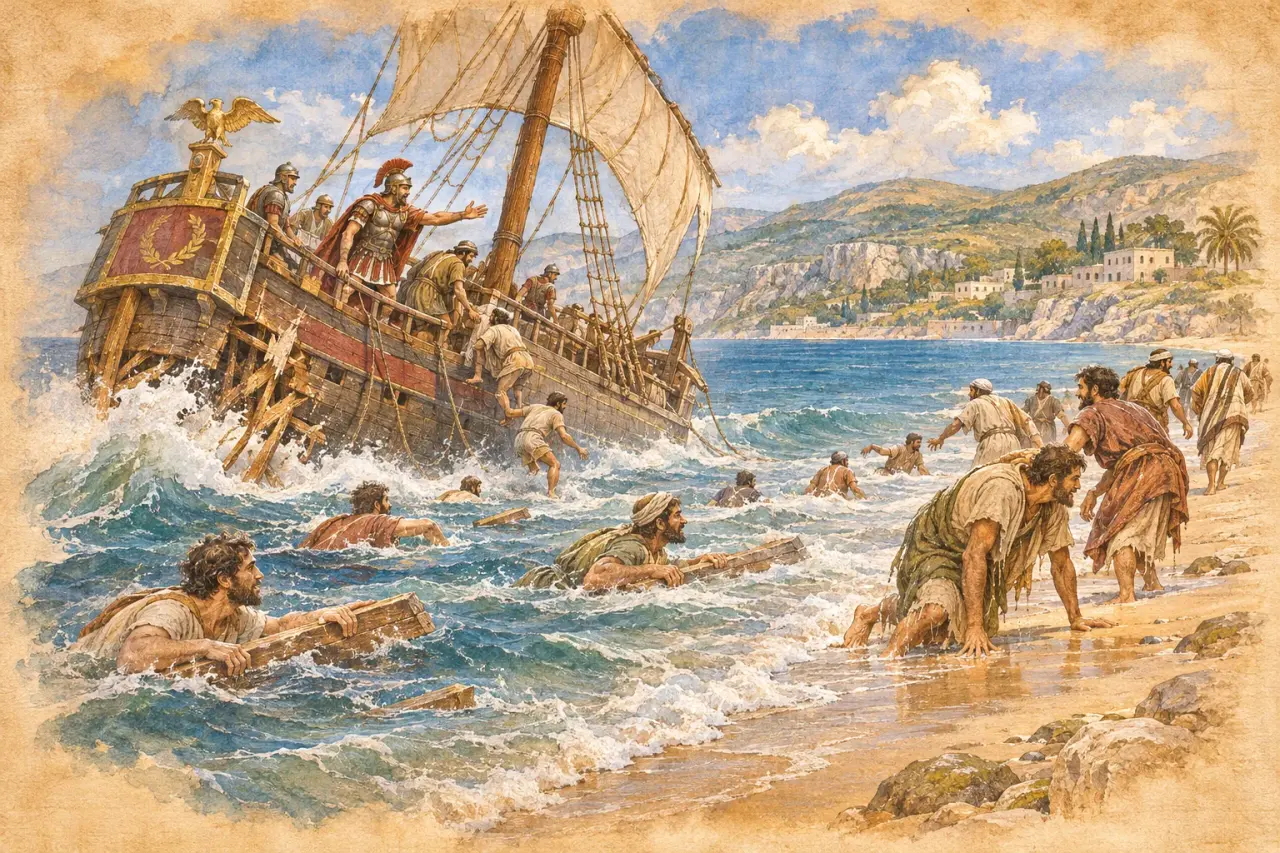
When it was day they did not recognise the land, but they noticed a bay with a beach and decided to try to drive the ship onto it. They cast off the anchors and left them in the sea, untied the rudder ropes, hoisted the foresail to the wind and made for the beach. But they came to a place where two seas met, and the ship ran aground. The bow stuck and would not move, and the stern began to break up under the violence of the waves.
The soldiers' plan was to kill the prisoners so that none of them could swim away and escape. But the centurion wanted to save Paul, and he stopped them. He commanded those who could swim to throw themselves overboard first and make for land. The rest were to follow, some on planks and some on other things from the ship. So they all escaped safely to the land.
But coming to a place where two seas met, they ran the vessel aground. The bow struck and remained immovable, but the stern began to break up by the violence of the waves.
Acts 27:41 · World English Bible -
VIMalta and the viper
Acts 28:1–10
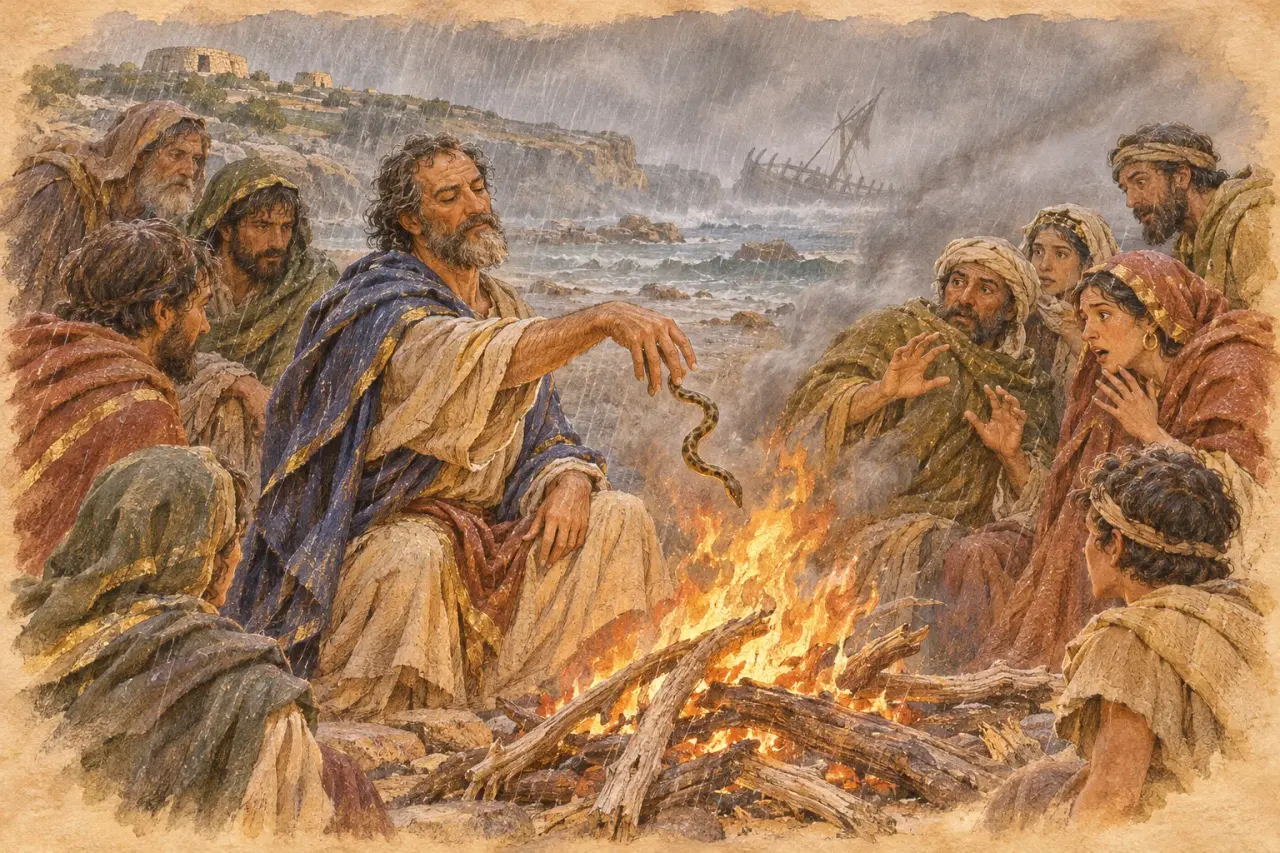
Once they had escaped they learnt that the island was called Malta. It was raining and cold, and the people there showed them uncommon kindness and lit a fire. Paul laid a bundle of sticks on it, and a viper came out because of the heat and fastened on his hand. The islanders said he must be a murderer. He had escaped the sea, but Justice had not let him live. Paul shook the creature off into the fire and was not harmed. They watched a long time for him to swell up or fall down dead. Then they changed their minds and said he was a god.
Publius, the chief man of the island, received them and entertained them for three days. His father lay sick with fever and dysentery. Paul went in, prayed, laid his hands on him and healed him. Then the rest of the sick on the island came and were cured. When they sailed, the islanders put on board the things they needed.
The natives showed us uncommon kindness; for they kindled a fire and received us all, because of the present rain and because of the cold.
Acts 28:2 · World English Bible
Key verse
Therefore, sirs, cheer up! For I believe God, that it will be just as it has been spoken to me.
Acts 27:25 · World English Bible
How it fits the whole story
Paul had already been told that he must bear witness in Rome (Acts 23:11), and in the storm the angel says it again: he must stand before Caesar. So the sea could not keep him. Notice how that promise worked. Paul believed God, and he also told hungry people to eat and warned that the sailors must stay on board. A prisoner became the steadiest man on the ship, and 275 others were given their lives along with him. Trusting God made him more useful in the storm, not less.
Read it in Scripture
The telling above is a summary. Here is the passage itself, from the World English Bible.
Acts 27
1When it was determined that we should sail for Italy, they delivered Paul and certain other prisoners to a centurion named Julius, of the Augustan band. 2Embarking in a ship of Adramyttium, which was about to sail to places on the coast of Asia, we put to sea, Aristarchus, a Macedonian of Thessalonica being with us. 3The next day, we touched at Sidon. Julius treated Paul kindly and gave him permission to go to his friends and refresh himself. 4Putting to sea from there, we sailed under the lee of Cyprus, because the winds were contrary. 5When we had sailed across the sea which is off Cilicia and Pamphylia, we came to Myra, a city of Lycia. 6There the centurion found a ship of Alexandria sailing for Italy, and he put us on board. 7When we had sailed slowly many days, and had come with difficulty opposite Cnidus, the wind not allowing us further, we sailed under the lee of Crete, opposite Salmone. 8With difficulty sailing along it we came to a certain place called Fair Havens, near the city of Lasea. 9When much time had passed and the voyage was now dangerous because the Fast had now already gone by, Paul admonished them 10and said to them, “Sirs, I perceive that the voyage will be with injury and much loss, not only of the cargo and the ship, but also of our lives.” 11But the centurion gave more heed to the master and to the owner of the ship than to those things which were spoken by Paul. 12Because the haven was not suitable to winter in, the majority advised going to sea from there, if by any means they could reach Phoenix and winter there, which is a port of Crete, looking southwest and northwest. 13When the south wind blew softly, supposing that they had obtained their purpose, they weighed anchor and sailed along Crete, close to shore. 14But before long, a stormy wind beat down from shore, which is called Euroclydon. 15When the ship was caught and couldn’t face the wind, we gave way to it and were driven along. 16Running under the lee of a small island called Clauda, we were able, with difficulty, to secure the boat. 17After they had hoisted it up, they used cables to help reinforce the ship. Fearing that they would run aground on the Syrtis sand bars, they lowered the sea anchor, and so were driven along. 18As we laboured exceedingly with the storm, the next day they began to throw things overboard. 19On the third day, they threw out the ship’s tackle with their own hands. 20When neither sun nor stars shone on us for many days, and no small storm pressed on us, all hope that we would be saved was now taken away. 21When they had been long without food, Paul stood up in the middle of them and said, “Sirs, you should have listened to me, and not have set sail from Crete and have gotten this injury and loss. 22Now I exhort you to cheer up, for there will be no loss of life amongst you, but only of the ship. 23For there stood by me this night an angel, belonging to the God whose I am and whom I serve, 24saying, ‘Don’t be afraid, Paul. You must stand before Caesar. Behold, God has granted you all those who sail with you.’ 25Therefore, sirs, cheer up! For I believe God, that it will be just as it has been spoken to me. 26But we must run aground on a certain island.” 27But when the fourteenth night had come, as we were driven back and forth in the Adriatic Sea, about midnight the sailors surmised that they were drawing near to some land. 28They took soundings and found twenty fathoms. After a little while, they took soundings again, and found fifteen fathoms. 29Fearing that we would run aground on rocky ground, they let go four anchors from the stern, and wished for daylight. 30As the sailors were trying to flee out of the ship and had lowered the boat into the sea, pretending that they would lay out anchors from the bow, 31Paul said to the centurion and to the soldiers, “Unless these stay in the ship, you can’t be saved.” 32Then the soldiers cut away the ropes of the boat and let it fall off. 33While the day was coming on, Paul begged them all to take some food, saying, “Today is the fourteenth day that you wait and continue fasting, having taken nothing. 34Therefore I beg you to take some food, for this is for your safety; for not a hair will perish from any of your heads.” 35When he had said this and had taken bread, he gave thanks to God in the presence of all; then he broke it and began to eat. 36Then they all cheered up, and they also took food. 37In all, we were two hundred and seventy-six souls on the ship. 38When they had eaten enough, they lightened the ship, throwing out the wheat into the sea. 39When it was day, they didn’t recognise the land, but they noticed a certain bay with a beach, and they decided to try to drive the ship onto it. 40Casting off the anchors, they left them in the sea, at the same time untying the rudder ropes. Hoisting up the foresail to the wind, they made for the beach. 41But coming to a place where two seas met, they ran the vessel aground. The bow struck and remained immovable, but the stern began to break up by the violence of the waves. 42The soldiers’ counsel was to kill the prisoners, so that none of them would swim out and escape. 43But the centurion, desiring to save Paul, stopped them from their purpose, and commanded that those who could swim should throw themselves overboard first to go towards the land; 44and the rest should follow, some on planks and some on other things from the ship. So they all escaped safely to the land.
Acts 28:1-10
1When we had escaped, then they learnt that the island was called Malta. 2The natives showed us uncommon kindness; for they kindled a fire and received us all, because of the present rain and because of the cold. 3But when Paul had gathered a bundle of sticks and laid them on the fire, a viper came out because of the heat and fastened on his hand. 4When the natives saw the creature hanging from his hand, they said to one another, “No doubt this man is a murderer, whom, though he has escaped from the sea, yet Justice has not allowed to live.” 5However he shook off the creature into the fire, and wasn’t harmed. 6But they expected that he would have swollen or fallen down dead suddenly, but when they watched for a long time and saw nothing bad happen to him, they changed their minds and said that he was a god. 7Now in the neighbourhood of that place were lands belonging to the chief man of the island, named Publius, who received us and courteously entertained us for three days. 8The father of Publius lay sick of fever and dysentery. Paul entered in to him, prayed, and laying his hands on him, healed him. 9Then when this was done, the rest also who had diseases in the island came and were cured. 10They also honoured us with many honours; and when we sailed, they put on board the things that we needed.