A story from David, Shepherd & King · The United Kingdom
David, Bathsheba and Nathan
King David takes Bathsheba, the wife of his soldier Uriah, and arranges for Uriah to die in battle. The prophet Nathan confronts him with a story about a stolen lamb, and David confesses his sin.
Remember it byA king on a rooftop, a loyal soldier, a sealed letter, and a prophet who says: you are the man.
Where it fits
- Saul, the First Kingc. 1050 BC
- Bathshebac. 990 BC
- Solomon’s Templec. 959 BC
This story belongs to David, Shepherd & King on the timeline, in the era of The United Kingdom (c. 1050–930 BC).
Who is in it
-
David
Shepherd and king
The shepherd who killed Goliath, became king of Israel and wrote many of the psalms.
-
Bathsheba
Mother of Solomon
The wife of Uriah whom David took, later David's wife and the mother of King Solomon.
-
Uriah
Soldier of David
The loyal soldier who would not go home while the army was in the field, and died by David's order.
The story
-
IFrom the palace roof
2 Samuel 11:1–5
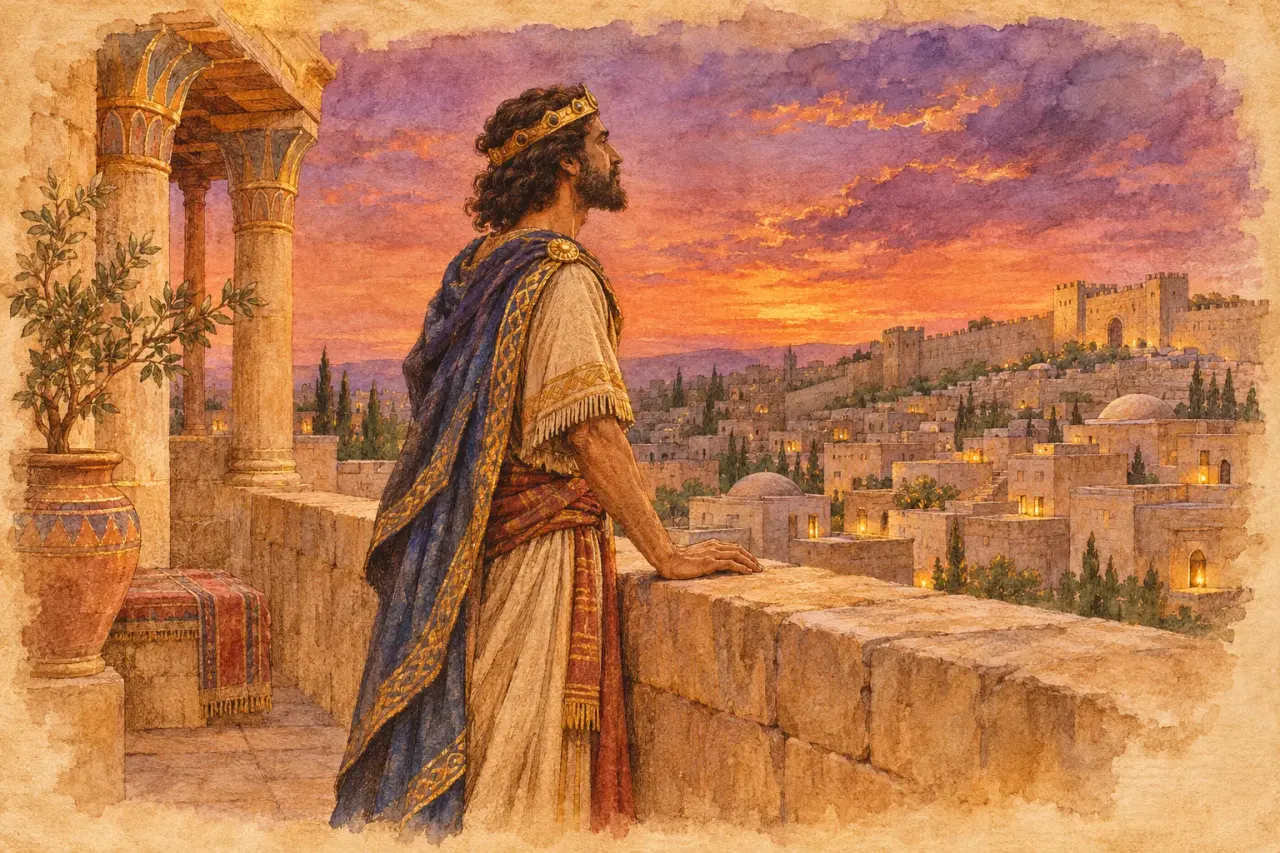
It was the time of year when kings go out to war. David sent Joab and all Israel to fight the Ammonites, and they besieged the city of Rabbah. But David stayed in Jerusalem. One evening he got up from his bed and walked on the roof of the king's house. From the roof he saw a woman bathing, and she was very beautiful.
David sent to ask who she was. He was told that she was Bathsheba, the daughter of Eliam and the wife of Uriah the Hittite. So he knew she was another man's wife. He sent messengers and took her all the same. He lay with her, and she went back to her house. Afterwards she sent word to the king that she was going to have a child.
-
IIUriah will not go home
2 Samuel 11:6–13
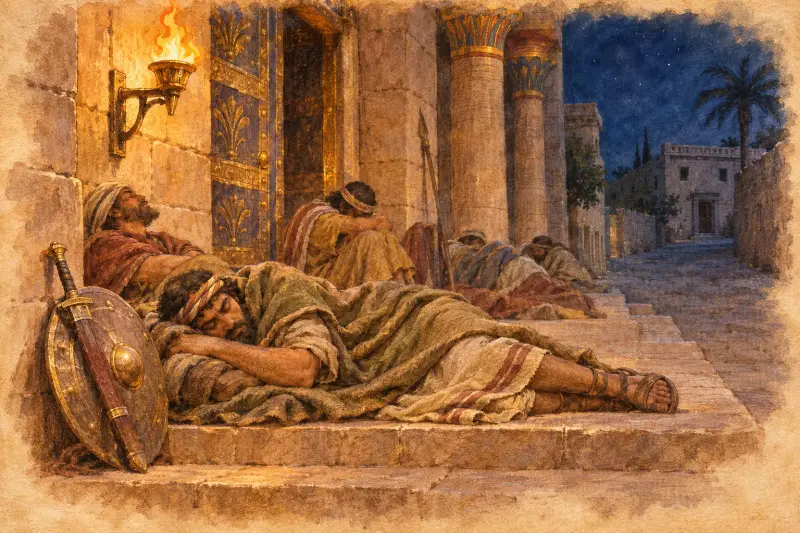
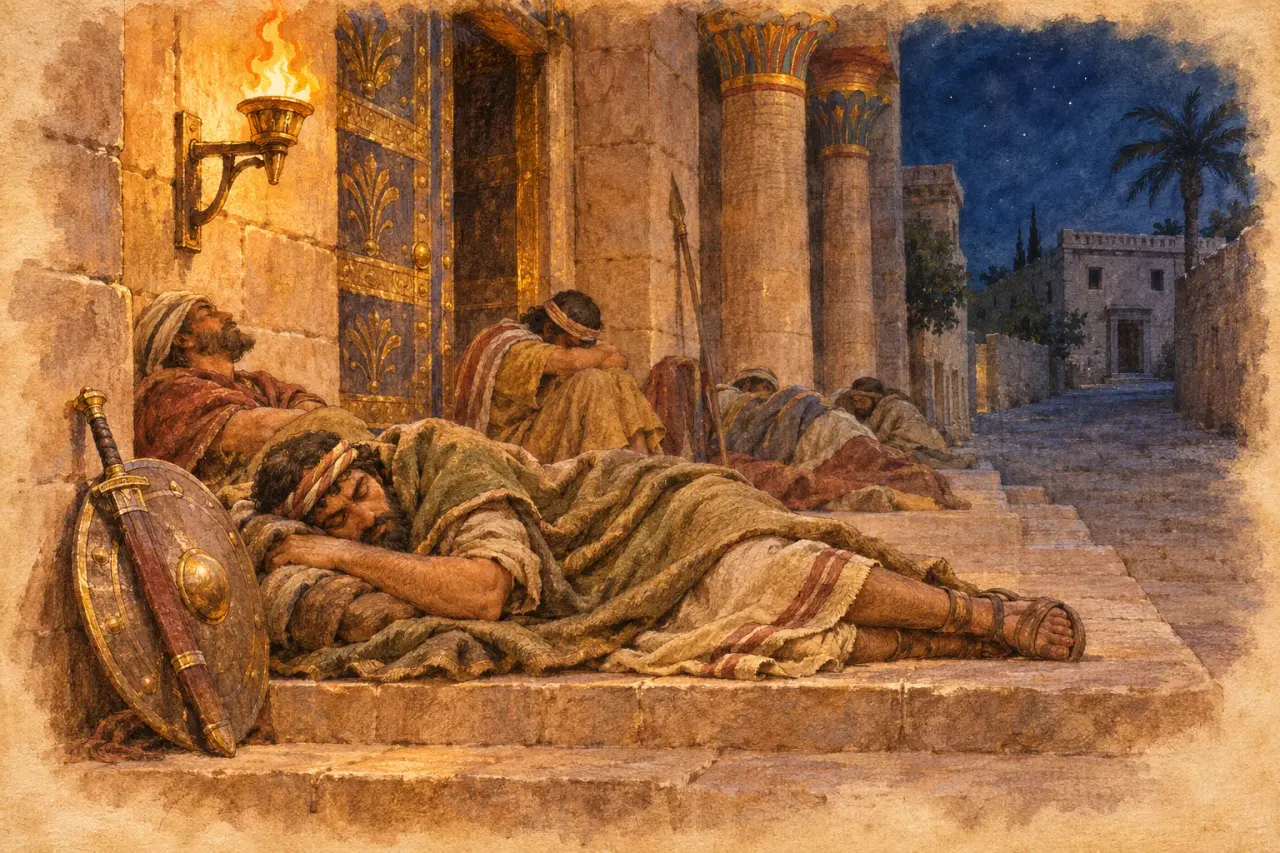
David sent word to Joab to send him Uriah the Hittite. When Uriah arrived, the king asked how Joab was, how the people were and how the war was going. Then he told Uriah to go down to his house, and he sent a gift after him. But Uriah did not go home. He slept at the door of the king's house with the servants of his lord.
David asked him why. Uriah answered that the ark, Israel and Judah were staying in tents, and Joab and the army were camped in the open field. He would not go to his house to eat and drink and be with his wife while they were out there. David kept him in Jerusalem another day. He ate and drank with him and made him drunk. Even then Uriah lay down that evening among the servants and did not go down to his house.
Uriah said to David, “The ark, Israel, and Judah, are staying in tents; and my lord Joab and the servants of my lord are encamped in the open field. Shall I then go into my house to eat and to drink, and to lie with my wife? As you live, and as your soul lives, I will not do this thing!”
2 Samuel 11:11 · World English Bible -
IIIThe letter to Joab
2 Samuel 11:14–27
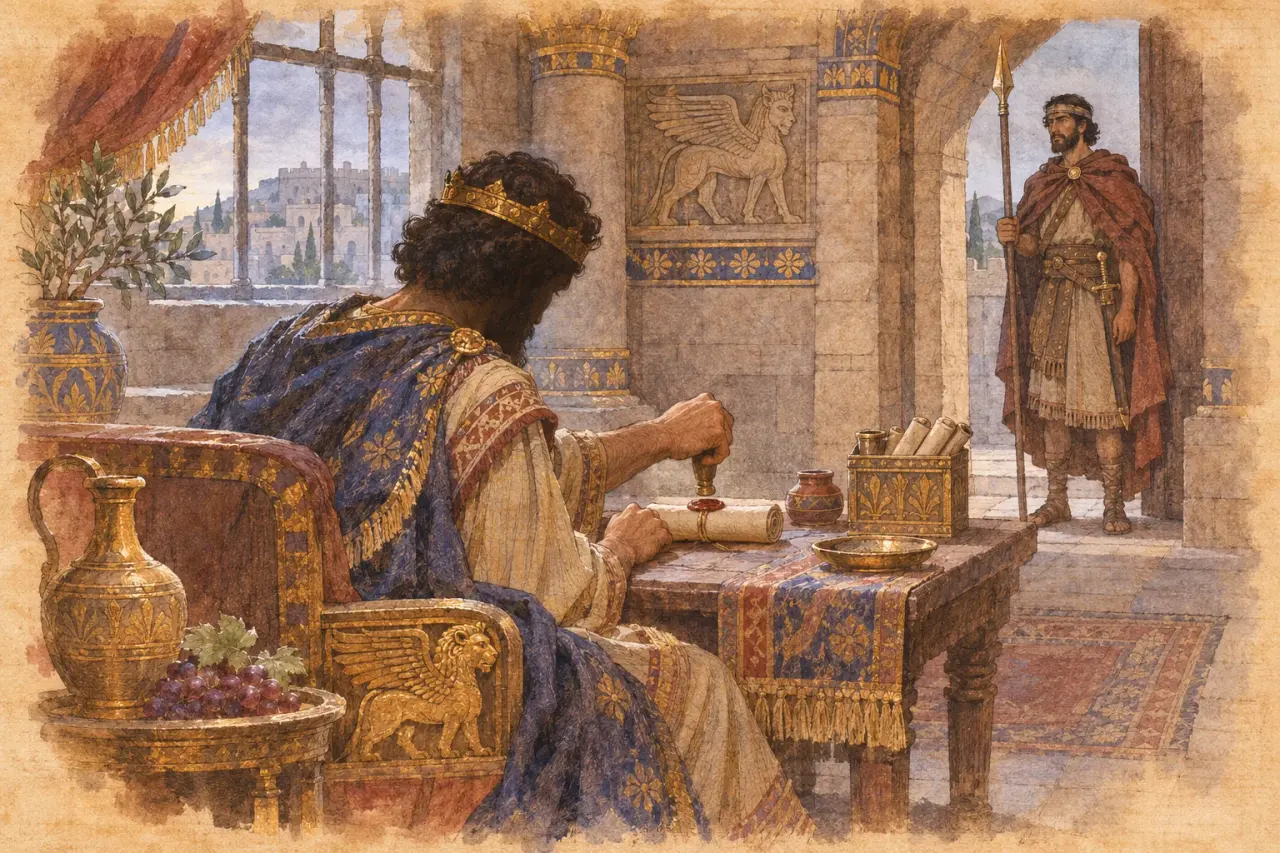
In the morning David wrote a letter to Joab and sent it by the hand of Uriah himself. It told Joab to put Uriah at the front where the fighting was hottest and then to pull back from him, so that he would be struck down and die. Joab placed him where he knew the bravest defenders were. The men of the city came out and fought. Some of David's servants fell, and Uriah the Hittite died too.
Joab sent a messenger to tell the king. David's answer was that Joab should not let this trouble him, because the sword devours one as well as another. When Uriah's wife heard that her husband was dead, she mourned for him. When the mourning was over, David brought her to his house. She became his wife and bore him a son. But the thing that David had done displeased the LORD.
When the mourning was past, David sent and took her home to his house, and she became his wife and bore him a son. But the thing that David had done displeased the LORD.
2 Samuel 11:27 · World English Bible -
IVThe poor man's lamb
2 Samuel 12:1–6
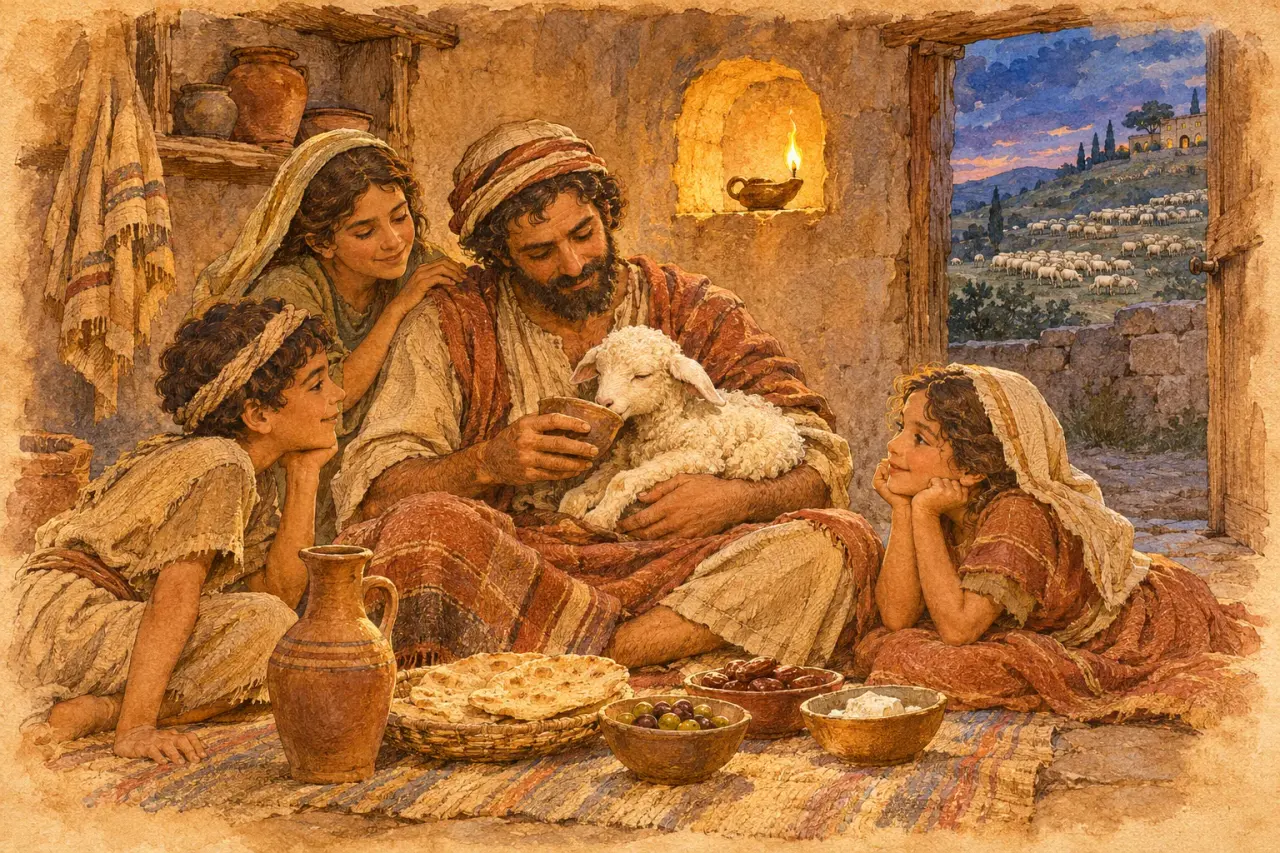
The LORD sent Nathan the prophet to David, and Nathan told him about two men who lived in one city. One was rich and had very many flocks and herds. The other was poor and had nothing except one little ewe lamb, which he had bought and raised. It grew up with him and his children. It ate his food, drank from his cup and lay in his arms, and it was like a daughter to him.
A traveller came to the rich man. The rich man did not want to take an animal from his own flock or herd for the meal. He took the poor man's lamb and prepared it for his guest. David's anger burned hot against that man. He swore that the man who had done this deserved to die, and that he must pay back the lamb four times over, because he had shown no pity.
David’s anger burnt hot against the man, and he said to Nathan, “As the LORD lives, the man who has done this deserves to die! He must restore the lamb fourfold, because he did this thing and because he had no pity!”
2 Samuel 12:5-6 · World English Bible -
VYou are the man
2 Samuel 12:7–14
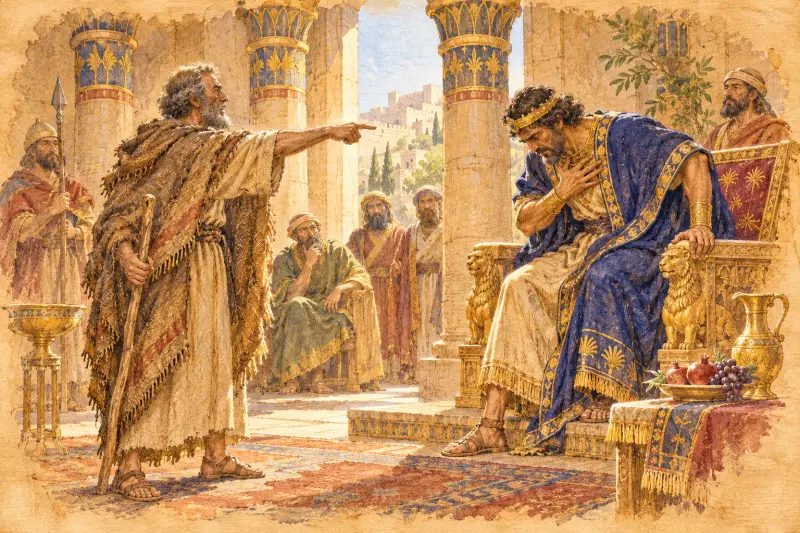
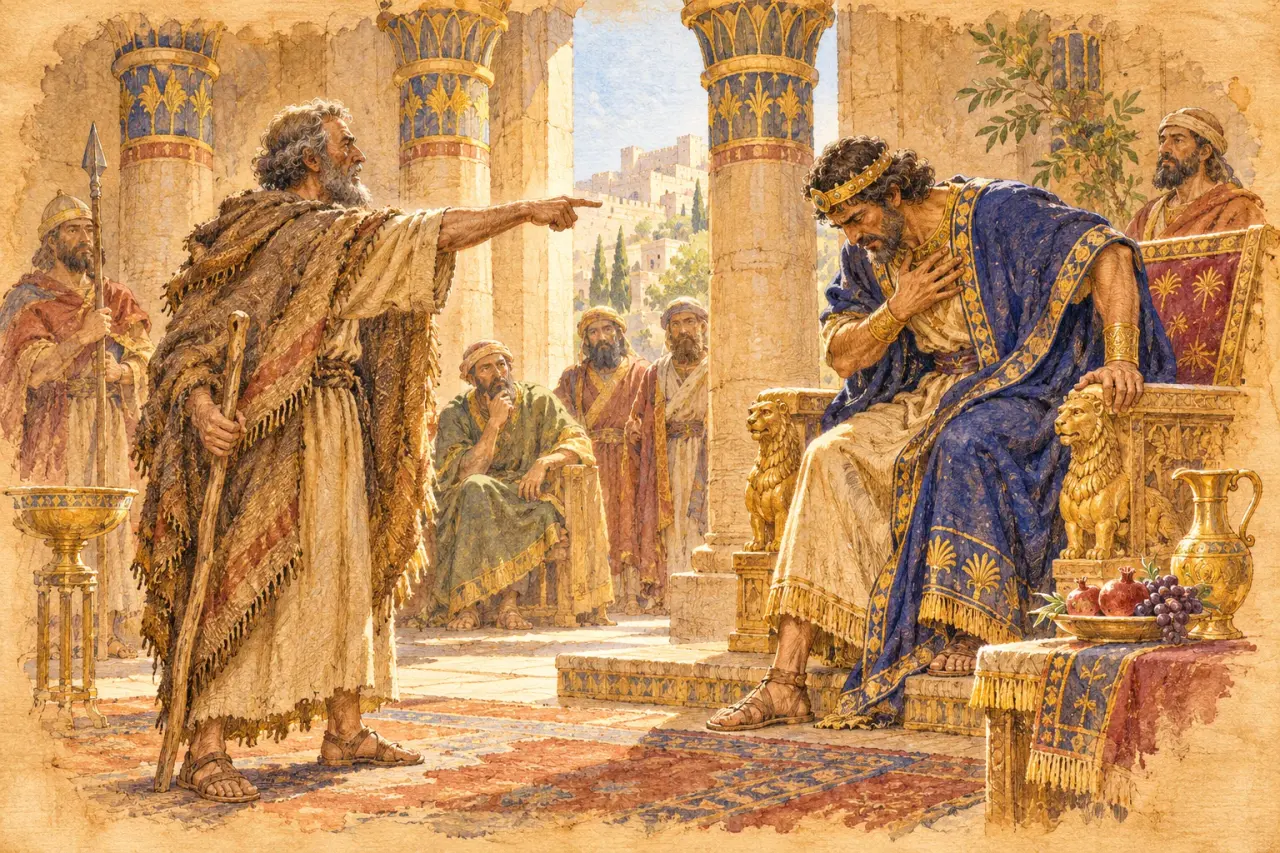
Then Nathan told the king that he was the man. He gave him the LORD's message. God had anointed David king over Israel, delivered him from the hand of Saul and given him the house of Israel and of Judah, and would have added much more. Why had he despised the word of the LORD? He had taken Uriah's wife and had killed Uriah with the sword of the Ammonites. So the sword would never leave David's own house. He had acted in secret, but what was coming would happen before all Israel.
David's answer was short. He said he had sinned against the LORD. Nathan told him that the LORD had put away his sin, and he would not die. But the deed had given the LORD's enemies great reason to speak against him, and the child who had been born to David would die.
Nathan said to David, “You are the man! This is what the LORD, the God of Israel, says: ‘I anointed you king over Israel, and I delivered you out of the hand of Saul.’”
2 Samuel 12:7 · World English Bible -
VIGrief, and a second son
2 Samuel 12:15–25
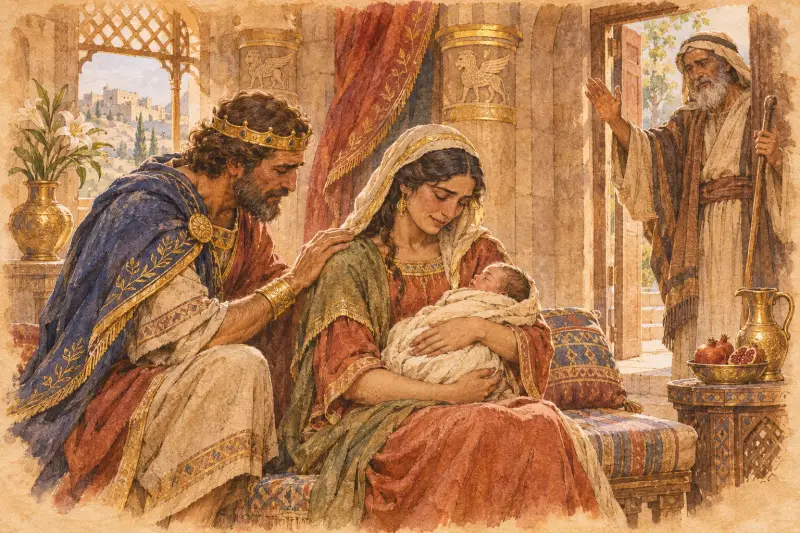
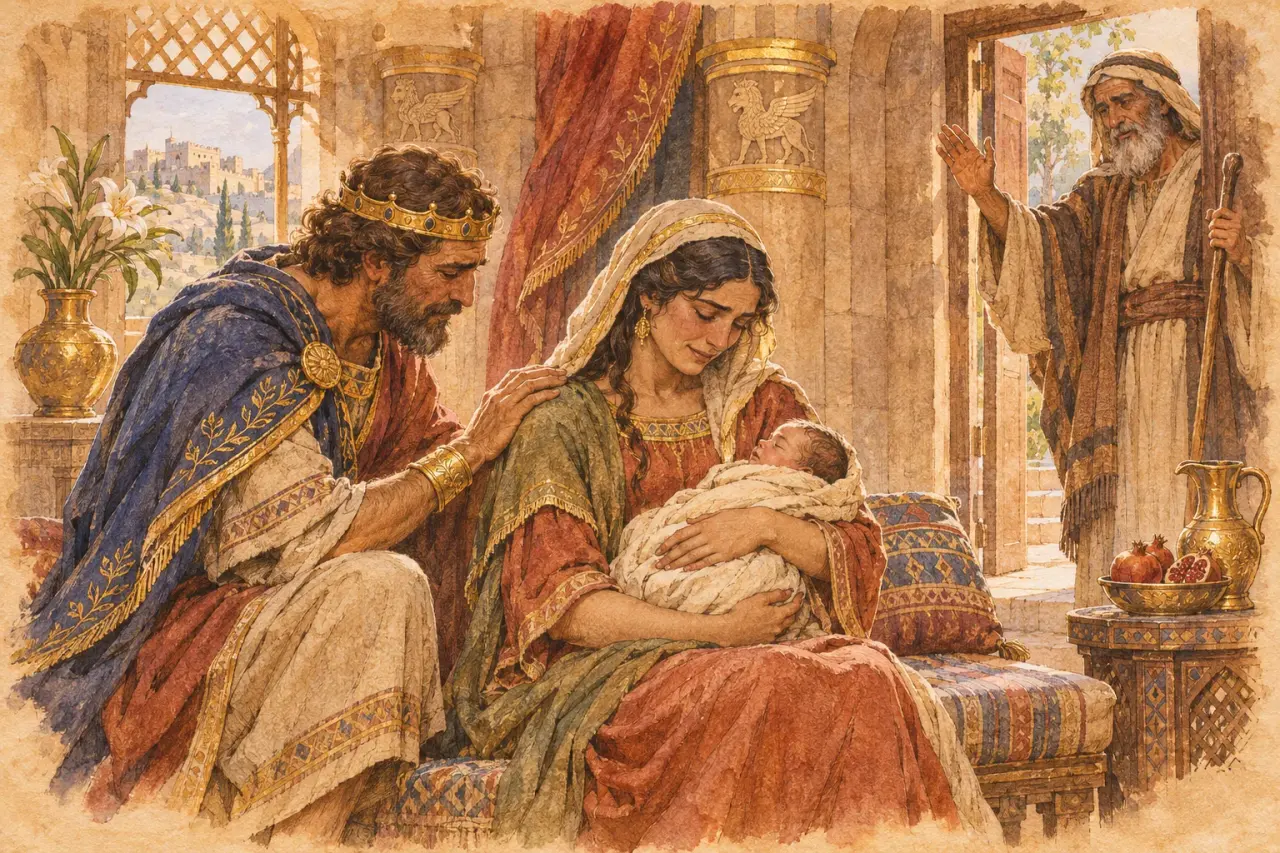
The child became very sick. David begged God for him. He fasted and lay all night on the ground, and the elders of his house could not get him to rise or to eat. On the seventh day the child died. The servants were afraid to tell him, but David saw them whispering and understood. He asked, and they told him.
Then David got up, washed, changed his clothes, went into the LORD's house and worshipped. After that he went home and ate. His servants asked him why. He said that while the child lived he had fasted and wept, in case the LORD would be gracious and let the child live. Now he could not bring him back. He would go to the child, but the child would not return to him. David comforted Bathsheba his wife, and she bore another son. He was named Solomon, and the LORD loved him. Through Nathan the prophet the LORD gave him another name, Jedidiah.
He said, “While the child was yet alive, I fasted and wept; for I said, ‘Who knows whether the LORD will not be gracious to me, that the child may live?’ But now he is dead. Why should I fast? Can I bring him back again? I will go to him, but he will not return to me.”
2 Samuel 12:22-23 · World English Bible
Key verse
David said to Nathan, “I have sinned against the LORD.” Nathan said to David, “The LORD also has put away your sin. You will not die.”
2 Samuel 12:13 · World English Bible
How it fits the whole story
The Bible does not hide the sins of its greatest king. David used his power to take another man's wife and then that man's life, and he did it in secret. It was not hidden from God. When Nathan named the sin, David did not blame anyone else. He confessed, and he was forgiven, though the harm he had done did not simply go away. Psalm 51 is his prayer from this time. And out of this broken story came Solomon, a son the LORD loved.
Read it in Scripture
The telling above is a summary. Here is the passage itself, from the World English Bible.
2 Samuel 11
1At the return of the year, at the time when kings go out, David sent Joab and his servants with him, and all Israel; and they destroyed the children of Ammon and besieged Rabbah. But David stayed at Jerusalem. 2At evening, David arose from his bed and walked on the roof of the king’s house. From the roof, he saw a woman bathing, and the woman was very beautiful to look at. 3David sent and enquired after the woman. One said, “Isn’t this Bathsheba, the daughter of Eliam, Uriah the Hittite’s wife?” 4David sent messengers, and took her; and she came in to him, and he lay with her (for she was purified from her uncleanness); and she returned to her house. 5The woman conceived; and she sent and told David, and said, “I am with child.” 6David sent to Joab, “Send me Uriah the Hittite.” Joab sent Uriah to David. 7When Uriah had come to him, David asked him how Joab did, and how the people fared, and how the war prospered. 8David said to Uriah, “Go down to your house and wash your feet.” Uriah departed out of the king’s house, and a gift from the king was sent after him. 9But Uriah slept at the door of the king’s house with all the servants of his lord, and didn’t go down to his house. 10When they had told David, saying, “Uriah didn’t go down to his house,” David said to Uriah, “Haven’t you come from a journey? Why didn’t you go down to your house?” 11Uriah said to David, “The ark, Israel, and Judah, are staying in tents; and my lord Joab and the servants of my lord are encamped in the open field. Shall I then go into my house to eat and to drink, and to lie with my wife? As you live, and as your soul lives, I will not do this thing!” 12David said to Uriah, “Stay here today also, and tomorrow I will let you depart.” So Uriah stayed in Jerusalem that day and the next day. 13When David had called him, he ate and drank before him; and he made him drunk. At evening, he went out to lie on his bed with the servants of his lord, but didn’t go down to his house. 14In the morning, David wrote a letter to Joab and sent it by the hand of Uriah. 15He wrote in the letter, saying, “Send Uriah to the forefront of the hottest battle, and retreat from him, that he may be struck and die.” 16When Joab kept watch on the city, he assigned Uriah to the place where he knew that valiant men were. 17The men of the city went out and fought with Joab. Some of the people fell, even of David’s servants; and Uriah the Hittite died also. 18Then Joab sent and told David all the things concerning the war; 19and he commanded the messenger, saying, “When you have finished telling all the things concerning the war to the king, 20it shall be that, if the king’s wrath arise, and he asks you, ‘Why did you go so near to the city to fight? Didn’t you know that they would shoot from the wall? 21Who struck Abimelech the son of Jerubbesheth? Didn’t a woman cast an upper millstone on him from the wall, so that he died at Thebez? Why did you go so near the wall?’ then you shall say, ‘Your servant Uriah the Hittite is also dead.’” 22So the messenger went, and came and showed David all that Joab had sent him for. 23The messenger said to David, “The men prevailed against us, and came out to us into the field; and we were on them even to the entrance of the gate. 24The shooters shot at your servants from off the wall; and some of the king’s servants are dead, and your servant Uriah the Hittite is also dead.” 25Then David said to the messenger, “Tell Joab, ‘Don’t let this thing displease you, for the sword devours one as well as another. Make your battle stronger against the city, and overthrow it.’ Encourage him.” 26When Uriah’s wife heard that Uriah her husband was dead, she mourned for her husband. 27When the mourning was past, David sent and took her home to his house, and she became his wife and bore him a son. But the thing that David had done displeased the LORD.
2 Samuel 12:1-25
1The LORD sent Nathan to David. He came to him, and said to him, “There were two men in one city: the one rich, and the other poor. 2The rich man had very many flocks and herds, 3but the poor man had nothing, except one little ewe lamb, which he had bought and raised. It grew up together with him and with his children. It ate of his own food, drank of his own cup, and lay in his bosom, and was like a daughter to him. 4A traveller came to the rich man, and he didn’t want to take of his own flock and of his own herd to prepare for the wayfaring man who had come to him, but took the poor man’s lamb and prepared it for the man who had come to him.” 5David’s anger burnt hot against the man, and he said to Nathan, “As the LORD lives, the man who has done this deserves to die! 6He must restore the lamb fourfold, because he did this thing and because he had no pity!” 7Nathan said to David, “You are the man! This is what the LORD, the God of Israel, says: ‘I anointed you king over Israel, and I delivered you out of the hand of Saul. 8I gave you your master’s house and your master’s wives into your bosom, and gave you the house of Israel and of Judah; and if that would have been too little, I would have added to you many more such things. 9Why have you despised the LORD’s word, to do that which is evil in his sight? You have struck Uriah the Hittite with the sword, have taken his wife to be your wife, and have slain him with the sword of the children of Ammon. 10Now therefore the sword will never depart from your house, because you have despised me and have taken Uriah the Hittite’s wife to be your wife.’ 11“This is what the LORD says: ‘Behold, I will raise up evil against you out of your own house; and I will take your wives before your eyes and give them to your neighbour, and he will lie with your wives in the sight of this sun. 12For you did this secretly, but I will do this thing before all Israel, and before the sun.’” 13David said to Nathan, “I have sinned against the LORD.” Nathan said to David, “The LORD also has put away your sin. You will not die. 14However, because by this deed you have given great occasion to the LORD’s enemies to blaspheme, the child also who is born to you will surely die.” 15Then Nathan departed to his house. The LORD struck the child that Uriah’s wife bore to David, and he was very sick. 16David therefore begged God for the child; and David fasted, and went in and lay all night on the ground. 17The elders of his house arose beside him, to raise him up from the earth; but he would not, and he didn’t eat bread with them. 18On the seventh day, the child died. David’s servants were afraid to tell him that the child was dead, for they said, “Behold, while the child was yet alive, we spoke to him and he didn’t listen to our voice. How will he then harm himself if we tell him that the child is dead?” 19But when David saw that his servants were whispering together, David perceived that the child was dead; and David said to his servants, “Is the child dead?” They said, “He is dead.” 20Then David arose from the earth, and washed and anointed himself, and changed his clothing; and he came into the LORD’s house, and worshipped. Then he came to his own house; and when he requested, they set bread before him and he ate. 21Then his servants said to him, “What is this that you have done? You fasted and wept for the child while he was alive, but when the child was dead, you rose up and ate bread.” 22He said, “While the child was yet alive, I fasted and wept; for I said, ‘Who knows whether the LORD will not be gracious to me, that the child may live?’ 23But now he is dead. Why should I fast? Can I bring him back again? I will go to him, but he will not return to me.” 24David comforted Bathsheba his wife, and went in to her, and lay with her. She bore a son, and he called his name Solomon. The LORD loved him; 25and he sent by the hand of Nathan the prophet, and he named him Jedidiah, for the LORD’s sake.