A story from Moses & the Burning Bush · The Exodus
Moses in the Basket
Pharaoh enslaves Israel and orders every baby boy thrown into the river. One mother hides her son in a basket among the reeds, and Pharaoh's own daughter finds him and raises him as her son.
Remember it byA cruel king, two brave midwives, a basket in the reeds, and a princess who took pity.
Where it fits
- Joseph in Egyptc. 1885 BC
- The Basketc. 1526 BC
- Passover & the Red Seac. 1446 BC
This story belongs to Moses & the Burning Bush on the timeline, in the era of The Exodus (c. 1446–1406 BC).
Who is in it
The story
-
IA king who feared Israel
Exodus 1:8–14
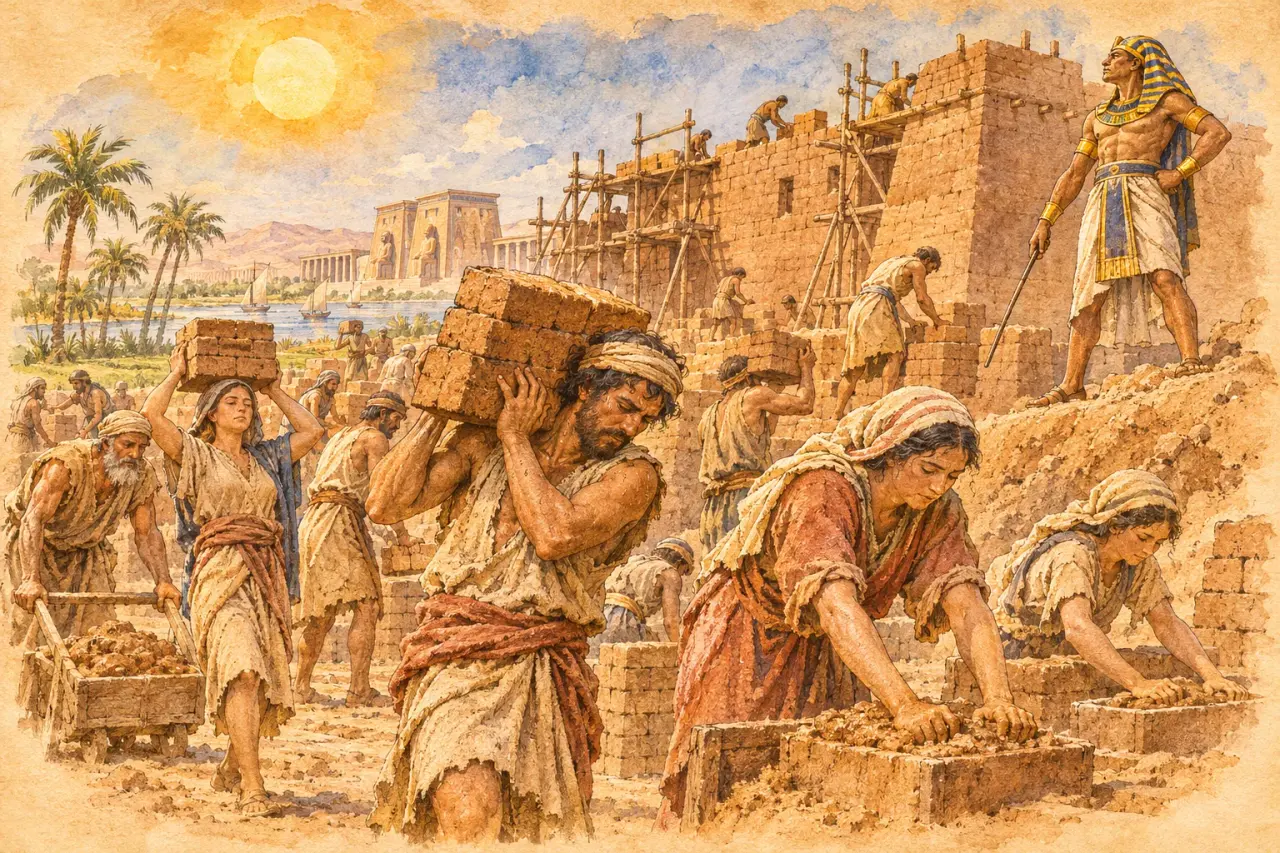
A new king arose over Egypt who did not know Joseph. He looked at the children of Israel and told his people that they had become more and mightier than the Egyptians. He was afraid that if a war broke out, they would join Egypt's enemies, fight against Egypt and escape from the land.
So the Egyptians set taskmasters over them to afflict them with burdens. The Israelites built the storage cities of Pithom and Raamses for Pharaoh. Their lives were made bitter with hard service in mortar and in brick, and with every kind of work in the field. The Egyptians were ruthless. But the plan did not work. The more the Israelites were afflicted, the more they multiplied and spread out, and the Egyptians came to dread them.
But the more they afflicted them, the more they multiplied and the more they spread out. They started to dread the children of Israel.
Exodus 1:12 · World English Bible -
IITwo midwives who feared God
Exodus 1:15–21
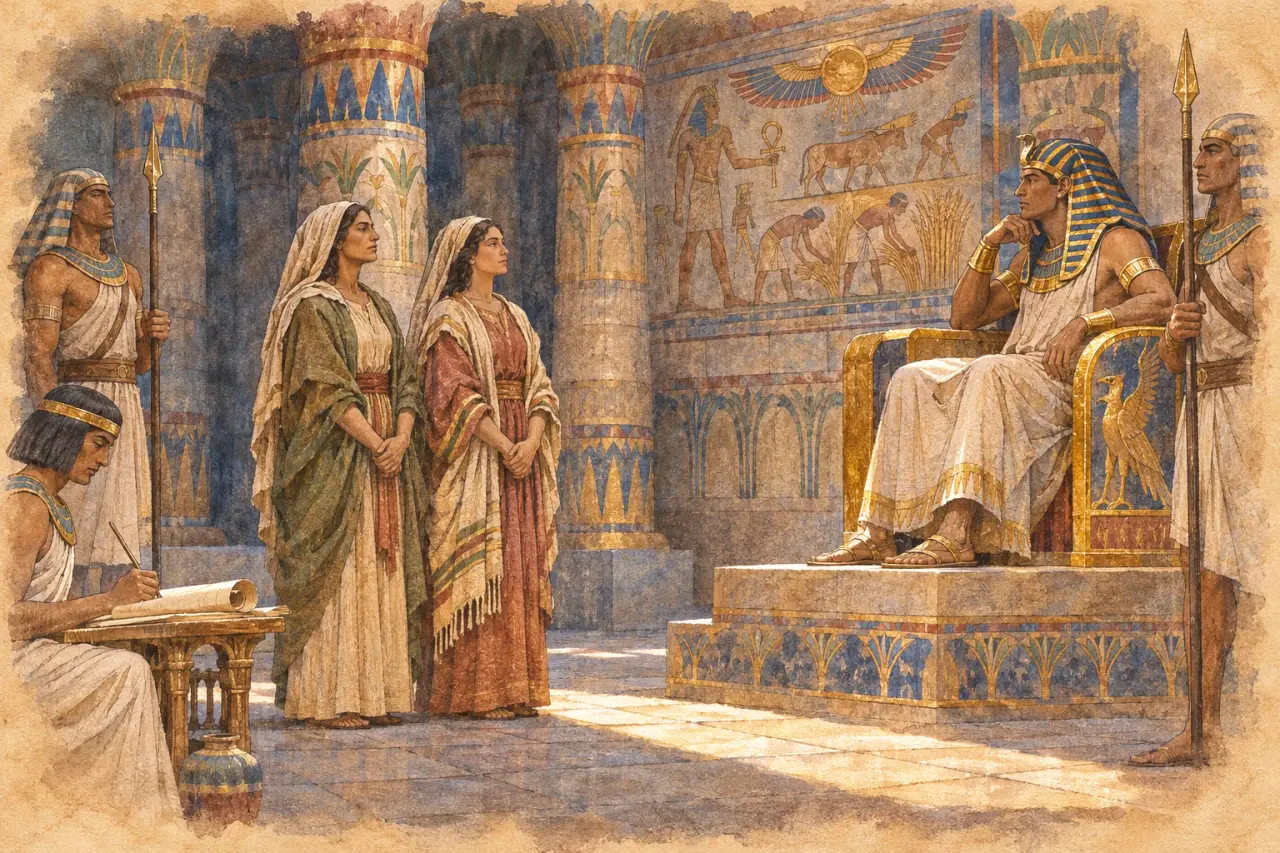
Then the king of Egypt spoke to the Hebrew midwives. One was named Shiphrah and the other Puah. When they helped the Hebrew women give birth, he said, they were to kill every son and let every daughter live. But the midwives feared God. They did not do what the king of Egypt commanded, and they saved the baby boys alive.
The king called for them and asked why they had done this. They answered that the Hebrew women were not like the Egyptian women. They were vigorous, and they gave birth before the midwife came to them. God dealt well with the midwives. The people multiplied and grew very mighty, and because the midwives feared God, he gave them families.
But the midwives feared God, and didn’t do what the king of Egypt commanded them, but saved the baby boys alive.
Exodus 1:17 · World English Bible -
IIIA basket in the reeds
Exodus 1:22–2:4
Pharaoh then gave a command to all his people. Every son who was born was to be thrown into the river, and every daughter was to be kept alive. It was no longer an order for two midwives. Now the whole country was told to carry it out.
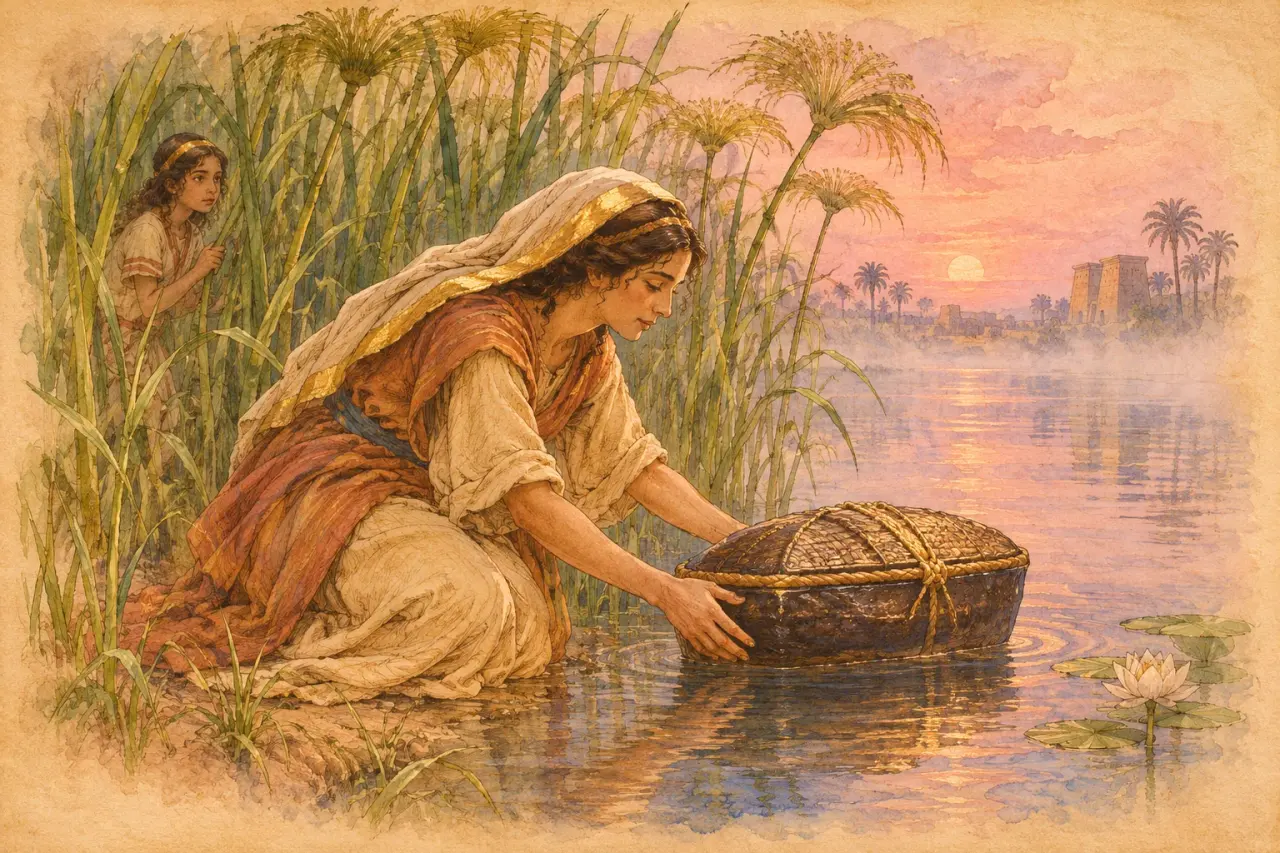
In those days a man of the house of Levi married a daughter of Levi. She conceived and bore a son, and when she saw that he was a fine child, she hid him for three months. When she could hide him no longer, she took a papyrus basket and coated it with tar and with pitch. She put the child in it and laid it in the reeds by the bank of the river. His sister stood far off, to see what would be done to him.
The woman conceived and bore a son. When she saw that he was a fine child, she hid him three months. When she could no longer hide him, she took a papyrus basket for him, and coated it with tar and with pitch. She put the child in it, and laid it in the reeds by the river’s bank.
Exodus 2:2-3 · World English Bible -
IVDrawn out of the water
Exodus 2:5–10
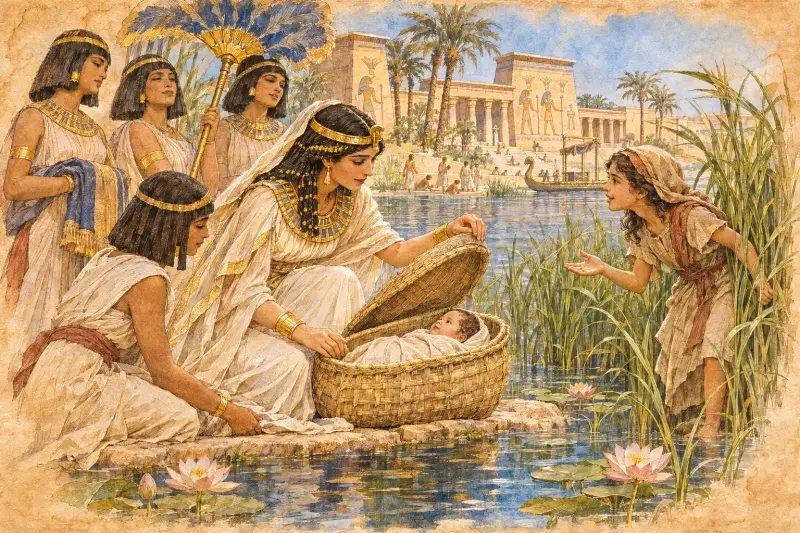
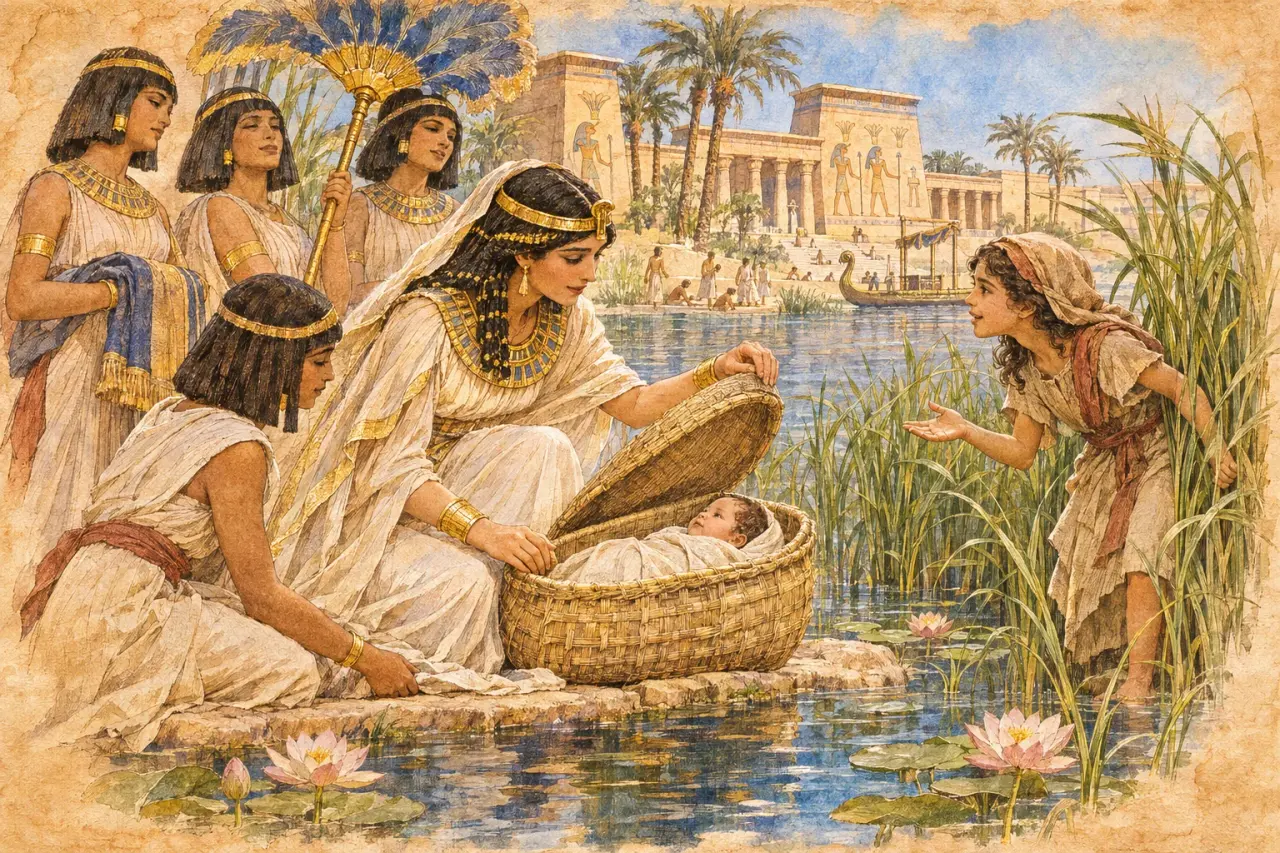
Pharaoh's daughter came down to bathe at the river while her maidens walked along the riverside. She saw the basket among the reeds and sent her servant to get it. When she opened it she saw the child, and the baby was crying. She had compassion on him and said that this was one of the Hebrews' children.
Then his sister asked Pharaoh's daughter if she should go and call a nurse from the Hebrew women. Pharaoh's daughter told her to go, and she went and called the child's own mother. Pharaoh's daughter told the woman to take the child and nurse him for her, and promised to pay her wages. So his mother took him and nursed him. When the child grew, she brought him to Pharaoh's daughter, and he became her son. She named him Moses, because she drew him out of the water.
Pharaoh’s daughter said to her, “Take this child away, and nurse him for me, and I will give you your wages.” The woman took the child, and nursed it.
Exodus 2:9 · World English Bible
Key verse
The child grew, and she brought him to Pharaoh’s daughter, and he became her son. She named him Moses, and said, “Because I drew him out of the water.”
Exodus 2:10 · World English Bible
How it fits the whole story
Exodus opens with God's people enslaved and their sons in danger. God is at work through people who look powerless: two midwives, a mother, a sister, and a princess moved by a baby's cry. The king who feared Israel ended up sheltering Israel's rescuer in his own house. This child would grow up to lead the people out of Egypt. The New Testament remembers the courage of his parents as faith (Hebrews 11:23).
Read it in Scripture
The telling above is a summary. Here is the passage itself, from the World English Bible.
Exodus 1:8-22
8Now there arose a new king over Egypt, who didn’t know Joseph. 9He said to his people, “Behold, the people of the children of Israel are more and mightier than we. 10Come, let’s deal wisely with them, lest they multiply, and it happen that when any war breaks out, they also join themselves to our enemies and fight against us, and escape out of the land.” 11Therefore they set taskmasters over them to afflict them with their burdens. They built storage cities for Pharaoh: Pithom and Raamses. 12But the more they afflicted them, the more they multiplied and the more they spread out. They started to dread the children of Israel. 13The Egyptians ruthlessly made the children of Israel serve, 14and they made their lives bitter with hard service in mortar and in brick, and in all kinds of service in the field, all their service, in which they ruthlessly made them serve. 15The king of Egypt spoke to the Hebrew midwives, of whom the name of the one was Shiphrah, and the name of the other Puah, 16and he said, “When you perform the duty of a midwife to the Hebrew women, and see them on the birth stool, if it is a son, then you shall kill him; but if it is a daughter, then she shall live.” 17But the midwives feared God, and didn’t do what the king of Egypt commanded them, but saved the baby boys alive. 18The king of Egypt called for the midwives, and said to them, “Why have you done this thing and saved the boys alive?” 19The midwives said to Pharaoh, “Because the Hebrew women aren’t like the Egyptian women; for they are vigourous and give birth before the midwife comes to them.” 20God dealt well with the midwives, and the people multiplied, and grew very mighty. 21Because the midwives feared God, he gave them families. 22Pharaoh commanded all his people, saying, “You shall cast every son who is born into the river, and every daughter you shall save alive.”
Exodus 2:1-10
1A man of the house of Levi went and took a daughter of Levi as his wife. 2The woman conceived and bore a son. When she saw that he was a fine child, she hid him three months. 3When she could no longer hide him, she took a papyrus basket for him, and coated it with tar and with pitch. She put the child in it, and laid it in the reeds by the river’s bank. 4His sister stood far off, to see what would be done to him. 5Pharaoh’s daughter came down to bathe at the river. Her maidens walked along by the riverside. She saw the basket amongst the reeds, and sent her servant to get it. 6She opened it, and saw the child, and behold, the baby cried. She had compassion on him, and said, “This is one of the Hebrews’ children.” 7Then his sister said to Pharaoh’s daughter, “Should I go and call a nurse for you from the Hebrew women, that she may nurse the child for you?” 8Pharaoh’s daughter said to her, “Go.” The young woman went and called the child’s mother. 9Pharaoh’s daughter said to her, “Take this child away, and nurse him for me, and I will give you your wages.” The woman took the child, and nursed it. 10The child grew, and she brought him to Pharaoh’s daughter, and he became her son. She named him Moses, and said, “Because I drew him out of the water.”